 Reviews



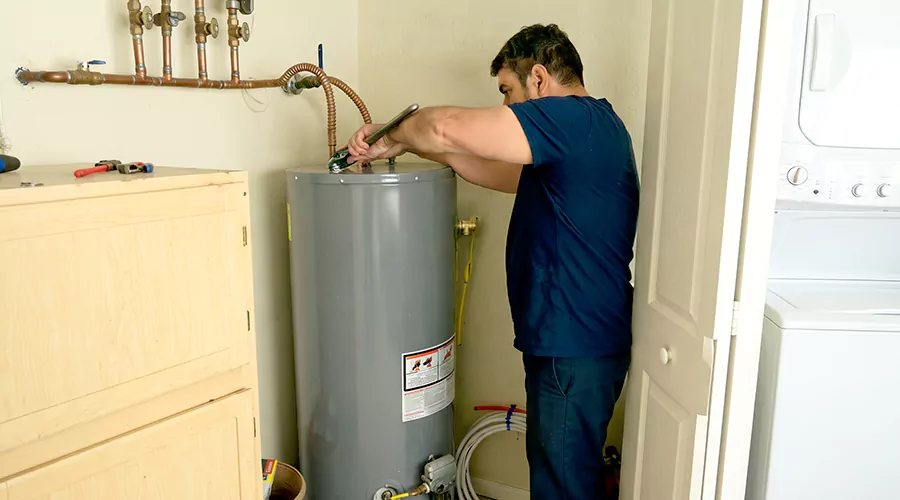
A water heater leaking from the top usually has a loose water-supply connection or a deteriorated fitting. Moisture can also originate from the anode-rod connection or a temperature-and-pressure relief valve mounted near the upper section of the tank. Professional water heater repair averages $616 in the United States in 2026.
The location of the leak provides the first diagnostic clue. Water collecting around an upper connection does not automatically mean the storage tank has failed. However, moisture entering the heater's insulation or electrical components requires immediate attention.
Identifying the first wet component helps distinguish an accessible plumbing leak from a more serious problem involving the tank itself.
What Causes a Water Heater to Leak From the Top?
Several plumbing connections are located near the upper section of a traditional storage water heater. These connections carry pressurized water into and out of the appliance. A damaged seal or deteriorated fitting can allow water to escape.
Common causes include:
- Loose inlet connection: Water escapes where the cold-water supply enters the heater.
- Leaking hot-water outlet: A damaged fitting allows heated water to escape.
- Corroded pipe connections: Deterioration affects the threaded fittings or connected piping.
- Anode-rod connection: Water escapes around the opening used to install the protective anode rod.
- Relief-valve connection: A valve installed near the top may leak around its threaded connection.
- Condensation: Moisture collects on cold supply piping under certain environmental conditions.
- Tank damage: Corrosion around an upper tank opening may indicate a more serious failure.
A.O. Smith identifies upper pipe fittings and their connections as important inspection points when investigating a leak near the top of a water heater.
What Does the Location of the Water Tell You?
Water can travel across the top of the heater before running down its exterior. The wettest area is therefore not always directly beneath the failed component.
A visual inspection should begin with the highest accessible point where moisture appears.
| Leak Location | Possible Cause | Initial Investigation |
|---|---|---|
| Cold-water inlet | Loose or damaged fitting | Inspect the inlet connection |
| Hot-water outlet | Worn connector or fitting | Check the outlet connection |
| Anode-rod opening | Failed connection or corrosion | Inspect the surrounding area |
| Relief-valve fitting | Connection leak | Identify where water begins |
| Relief discharge pipe | Excessive pressure or valve problem | Observe the discharge pattern |
| Cold exterior piping | Condensation | Check whether moisture forms across the surface |
| Upper tank seam | Possible structural damage | Keep the appliance isolated |
The distinction between a leaking connection and water escaping from the tank itself is particularly important.
An external fitting may be replaceable. A confirmed structural tank leak generally requires replacing the appliance.
How Can a Top Leak Get Worse?
An upper water heater leak can become more serious when escaping water enters the appliance's insulation or electrical components. Even a small connection leak can continue because the plumbing remains pressurized.
The following table compares common conditions with published 2026 U.S. repair costs.
| Condition | Typical Symptoms | Possible Consequence | Cost Reference |
|---|---|---|---|
| Early connection leak | Occasional moisture | Water begins collecting | Minor repair may be possible |
| Persistent fitting leak | Continuous dripping | Insulation becomes wet | Depends on the failed component |
| Relief-valve discharge | Water enters discharge pipe | Pressure or temperature problem | Requires diagnosis |
| Extensive leakage | Water collects around heater | Property damage | 228–1,017 for typical professional repairs |
| Confirmed tank failure | Water escapes from storage vessel | Heater replacement | 882–1,825 for tank-style replacement |
The repair figures come from Angi's August 2026 pricing report. Tank-style replacement prices reflect its July 2026 data. These are national U.S. estimates rather than quotations for a specific repair.
What Warning Signs Indicate a Serious Top Leak?
A water heater can develop visible warning signs before water begins collecting on the surrounding floor.
Inspect the accessible exterior for the following conditions:
- Water continuously collects around an upper pipe connection.
- Corrosion appears around the cold-water inlet.
- Moisture develops around the hot-water outlet.
- Water escapes from the anode-rod connection.
- The relief discharge pipe releases water repeatedly.
- Rust begins forming on the top of the heater.
- Water travels beneath the appliance's exterior covering.
- Moisture appears near electrical components.
- The surrounding floor becomes wet.
- Leakage increases while the heater operates.
Water near electrical access panels deserves particular caution.
Do not remove electrical covers or attempt to touch internal components during an ordinary visual inspection.
Why Does the Cold-Water Inlet Leak?
The cold-water inlet carries pressurized water into the heater. A damaged fitting or deteriorated connector can allow water to escape around this connection.
Because the connection remains under pressure, the leak may continue even when nobody is using hot water.
Visible corrosion is another warning sign.
A fitting that has deteriorated significantly may require replacement rather than tightening.
The inlet connection should be inspected for moisture and visible damage without dismantling the plumbing.
A.O. Smith recommends using dry paper towels to locate moisture around accessible water connections.
Can the Hot-Water Outlet Cause a Top Leak?
Yes. The hot-water outlet carries heated water from the storage tank into the property's distribution piping.
A damaged connector or deteriorated threaded fitting can leak around this connection.
Because the water may be extremely hot, avoid touching the fitting during operation.
Possible warning signs include:
- Moisture collecting around the outlet connection.
- Mineral deposits forming near the fitting.
- Corrosion developing around connected piping.
- Water travelling from the outlet toward the tank's exterior.
A leak appearing near the outlet does not necessarily mean the hot-water pipe itself has failed.
The threaded connection may be the actual source.
Can the Anode Rod Cause Water to Leak From the Top?
The anode rod helps protect the steel storage tank against corrosion. On many models, the rod enters through an opening near the top of the heater.
Moisture can sometimes develop around this connection.
A worn sealing connection or corrosion near the opening may allow water to escape.
The anode rod also deteriorates gradually as it performs its protective function.
A.O. Smith recommends inspecting the rod for substantial deterioration and replacing it when necessary. However, an anode-rod leak should not automatically be treated as an ordinary maintenance problem.
Corrosion around the tank opening may indicate damage requiring further investigation.
Do not attempt to remove a seized anode rod from an actively leaking heater.
Why Is Water Coming From the Relief-Valve Area?
Some water heaters have a temperature-and-pressure relief valve located near their upper section.
This safety component releases water when certain operating limits are reached.
Water can escape from the valve's threaded connection or through its discharge pipe. These are different conditions.
A leaking connection may involve the fitting itself.
Water emerging from the discharge pipe can indicate excessive pressure or another operating problem.
Bradford White identifies thermal expansion inside closed plumbing systems as a possible cause of repeated relief-valve discharge.
Never cap the relief valve or block its discharge pipe.
Could the Moisture Be Condensation?
Condensation can develop when humid air contacts cold water pipes or other cool surfaces.
This condition may create moisture near the top of the heater without an actual plumbing connection failure.
Condensation generally forms across a surface rather than emerging repeatedly from one precise fitting.
However, the appearance of moisture alone cannot confirm its source.
A.O. Smith recognizes condensation as one possible explanation for water found around a heater. The manufacturer recommends checking other potential leak locations before concluding that the storage tank has failed.
A persistent drip from one connection is more consistent with a leak than moisture distributed across a cold pipe.
How Can You Safely Identify the Leak?
A visual inspection can help identify the first wet component without dismantling the appliance.
Begin by following the manufacturer's emergency shutdown instructions if an active leak is present.
Then perform these checks only when the area is safe:
- Turn off the heater's energy supply according to its instructions.
- Isolate the incoming water supply if the valve is accessible and operates safely.
- Keep clear of hot-water discharge.
- Inspect the accessible top connections visually.
- Look for corrosion around the inlet and outlet fittings.
- Observe the exterior around the anode-rod opening.
- Identify whether water is emerging from the relief discharge pipe.
- Record where moisture appears.
- Check the surrounding area for additional water damage.
Do not remove insulation or electrical access covers.
Avoid touching hot pipe connections or loosening pressurized fittings.
When Should You Call a Professional?
Professional inspection becomes appropriate when an upper connection continues leaking or water is escaping from the relief-valve system.
Seek assistance when:
- The inlet or outlet connection is severely corroded.
- Water escapes around the anode-rod opening.
- The relief valve repeatedly discharges.
- Moisture enters electrical components.
- The source cannot be identified safely.
- Water continues leaking after the supply has been isolated.
- Corrosion appears around the tank's structural openings.
A confirmed tank failure generally requires replacement rather than an ordinary fitting repair.
How Can You Prevent Future Top Leaks?
Regular inspection can help identify moisture before it spreads into the appliance or surrounding property.
Useful maintenance habits include:
- Inspect visible water connections periodically.
- Check for corrosion around upper fittings.
- Follow the manufacturer's anode-rod maintenance schedule.
- Investigate repeated relief-valve discharge.
- Check for excessive water pressure when suspected.
- Keep the surrounding area accessible.
- Address new moisture promptly.
Maintenance cannot prevent every component failure, but it can help identify developing problems before substantial water damage occurs.
Conclusion
If your water heater is leaking from the top, begin by identifying the first wet connection. Cold-water inlet fittings and hot-water outlets are common sources. The anode-rod opening and relief-valve system require separate inspection.
Do not assume that water on top means the storage tank has failed. However, corrosion around structural openings or repeated relief-valve discharge deserves professional attention. Inspect the visible upper connections periodically for early moisture.
Frequently Asked Questions
Can a water heater leak from the top without needing replacement?
Yes. Some leaks originate from replaceable external connections rather than the storage tank.
Why is water collecting around the cold-water inlet?
A loose or deteriorated inlet fitting may be leaking. Condensation is another possible explanation.
Can the anode rod cause a top leak?
Water can escape around a damaged anode-rod connection. Corrosion near the opening requires careful inspection.
Why does my heater leak from the top only while heating?
Thermal expansion or changing operating conditions may expose an existing connection problem.
Should I keep using a heater that leaks from the top?
An active leak should be investigated before continued operation, particularly when water approaches electrical components.